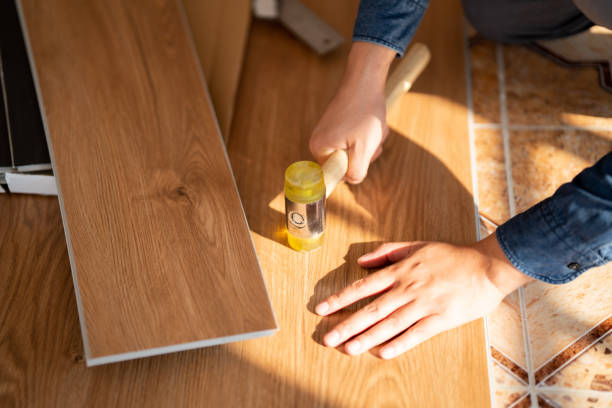

Some things in home design come and go with the trends. Hardwood flooring is not one of them. It’s been the mark of a well-built home for centuries, and it continues to be one of the most sought-after features in residential real estate for a very simple reason: it’s beautiful, it’s durable, and it gets better with age in a way that almost no other flooring material does. A hardwood floor properly installed and maintained can last the lifetime of the home.
But the word ‘properly’ is doing a lot of work in that sentence. Professional hardwood floor installation is a genuine craft — one where the preparation, the techniques, and the attention to detail determine whether a floor lives up to its potential or disappoints from the first year.
Solid vs. Engineered: Understanding the Distinction
Homeowners shopping for hardwood floors quickly encounter the solid vs. engineered debate, and it’s worth understanding what each actually offers. Solid hardwood is exactly what it sounds like — a plank of solid wood from top to bottom, typically 3/4 inch thick. It can be sanded and refinished multiple times over its life, which is why a solid hardwood floor installed well can genuinely last a century.
Engineered hardwood has a real wood veneer on top — often just as thick as the wear layer on solid hardwood — bonded to layers of plywood or composite below. The layered construction makes it dimensionally more stable than solid wood, meaning it handles moisture and humidity fluctuations better. It can typically be refinished once or twice. For concrete subfloors, below-grade installations, or climates with significant humidity variation, engineered hardwood is often the technically superior choice.
The right choice depends on the specifics of your home — subfloor type, floor level, local climate, and long-term plans. A professional installer helps you make this decision with full information rather than defaulting to whichever option is easier to install.
Acclimation: Why It Matters Before Installation
Wood is a living material in the sense that it responds to its environment. Before installation, hardwood flooring needs to acclimate to the conditions of the space where it will be installed — the temperature and humidity that will be its permanent home. If wood is installed before it has acclimated, it will adjust after installation: expanding and causing buckling if the wood was too dry, or shrinking and causing gaps if it was too wet.
Professional hardwood floor installation always includes an acclimation period. How long depends on the species, the product format, the subfloor type, and the conditions in the space. Skipping or shortening this step is one of the most common causes of hardwood floor failures — and it’s entirely preventable.
Nail-Down, Glue-Down, Float: Choosing the Right Method
The installation method for hardwood flooring depends on the subfloor type and the flooring format. Nail-down installation — where planks are fastened to a wood subfloor with cleats or staples — is the traditional method and produces a very stable, solid-feeling floor. Glue-down installation is used over concrete subfloors and some wood subfloors, bonding the planks directly to the substrate. Floating installation, where the floor is not fastened to the subfloor but clicks together and sits on top, offers flexibility and is used in certain applications.
Each method has specific technical requirements. Nail-down requires a wood subfloor of sufficient thickness and stability to hold fasteners. Glue-down requires correct adhesive selection and application technique. Floating requires proper underlayment and expansion gap management. Getting the method wrong for the subfloor conditions creates installation failures that require the floor to be removed and reinstalled.
Finishing: The Final Step That Defines the Look
For unfinished hardwood, the finishing process — sanding, staining if desired, and applying protective coats — happens on-site after installation. This is skilled work. Sanding requires the right sequence of grits to achieve a smooth, even surface without chatter marks or swirl patterns. Stain application needs to be even to avoid blotching. Finish coats need to be applied correctly for proper adhesion and sheen consistency.
Pre-finished hardwood arrives with the factory finish already applied, which has advantages in durability and the elimination of finish odors during installation. The tradeoff is less flexibility in stain color customization and beveled edges between planks that collect dirt over time.
For hardwood floors that will look exactly right and last as long as they should, Cruz Home Construction brings the craft and knowledge that professional hardwood floor installation demands.